
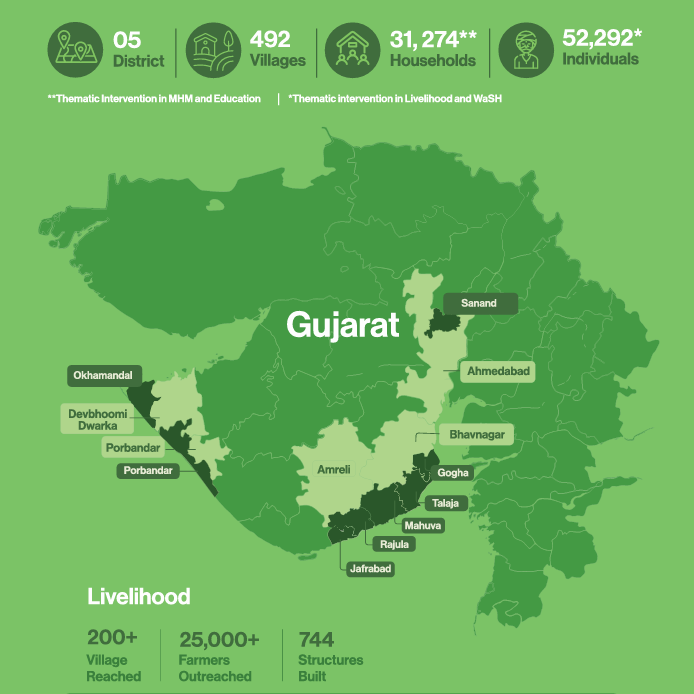
Coastal Gujarat, home to over 1,600 kilometers of shoreline, is one of India’s most salinity-affected regions. Over the decades, the slow ingress of seawater into groundwater and soil has silently eroded the backbone of rural livelihoods. Today, Gujarat accounts for 2.23 million hectares of saline land—the highest in India—leading to an estimated annual agricultural loss of ₹100 billion.
The crisis is multi-layered:
At Coastal Salinity Prevention Cell, we believe tackling salinity needs long-term, solution-driven strategies, not short-term fixes. Our approach integrates:
Helping communities design water budgets and adopt demand-side management.
Promoting check-dams, recharge wells, and rainwater harvesting to push back salinity ingress.
Encouraging salt-tolerant crops, micro-irrigation, and soil reclamation techniques to restore productivity.
Supporting livestock interventions and alternative incomes for resilience against crop losses.