
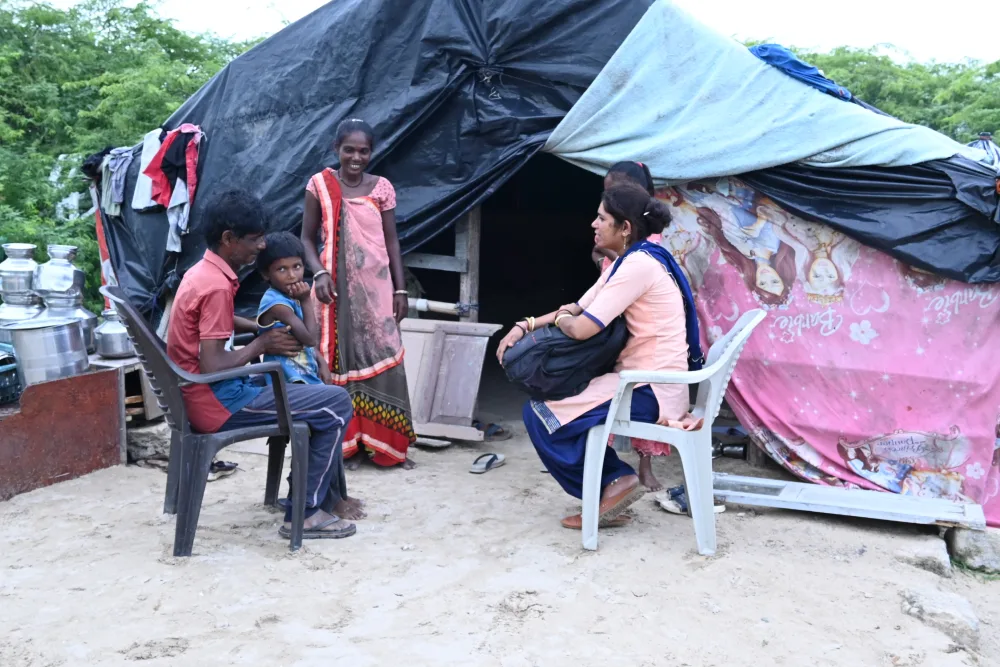
Tucked behind the Jalaram Society along Dwarka’s national highway lies Gopal Gareda, a small settlement of makeshift huts inhabited by families from the Devipujak community of Okhamandal, one of the most marginalized groups in the region. For generations, livelihood for these families came from begging, collecting waste, and scrap trading. Education was never considered an option, with most children accompanying their parents in daily survival routines.
In September 2024, CSPC’s community educators launched a door-to-door survey in Okhamandal block, identifying 39 out-of-school children between 6–12 years in Gopal Gareda alone. Most had never stepped into a classroom.
Turning Point: From Resistance to Realization
Understanding the deep-rooted socio-economic barriers, CSPC introduced volunteer-led bridge classes in early 2024. Initially met with resistance, efforts were supported by community leaders and SMC members.
The children, unfamiliar with structured learning, were restless and irregular. Through play-based pedagogy and consistent parent engagement, volunteers gradually built rapport. Over time, the children’s interest in learning grew, and parental attitudes began to shift.
Overcoming Documentation Barriers
With frequent relocations and no official documents, school admissions posed another challenge. CSPC’s facilitators supported families in securing Aadhaar cards, birth certificates, and other essentials. Their persistent advocacy bore fruit.
Impact
- 23 children from Gopal Gareda were successfully enrolled in formal schools
- 3 volunteer classes continue to support their learning transition
- Families now view education as a viable path away from inherited hardship
Why This Matters
This story along with the enrollment also speaks a lot about dignity, inclusion, and breaking intergenerational cycles of marginalization. Through consistent field presence, collaboration with School Management Committees, and unwavering community trust-building, Gopal Gareda’s children are now walking toward a brighter future, with schoolbags instead of scrap sacks.