
Introduction:
In the heart of Rajula District lies Brabatana village, a community deeply rooted in agriculture and dairy farming. For generations, families like Dayaben’s have relied on traditional farming practices to sustain their livelihoods. However, in recent years, the challenges of climate change, soil degradation, and limited resources have made it increasingly difficult for farmers to maintain their productivity and profitability. In response to these challenges, the Coastal Salinity Prevention Cell (CSPC) has introduced innovative solutions to help farmers adapt and thrive. One such initiative is the provision of Multicut Fodder Sorghum (COFS), a sustainable and high-yielding fodder crop that has revolutionized dairy farming in the region.
Dayaben’s Journey:
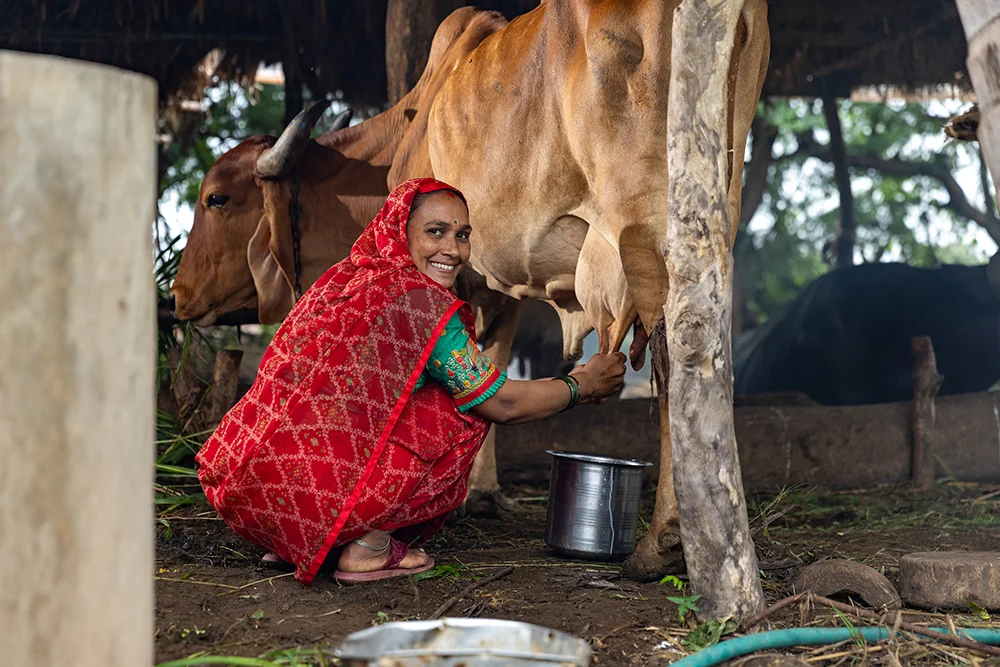
Dayaben is a resident of Brabatana village and a member of a family that has been engaged in agriculture and dairy farming for generations. The availability of quality fodder was a constant concern, particularly during the dry seasons when traditional fodder crops were scarce.
In 2023, as part of CSPC’s initiative, Dayaben’s family was provided with COFS seeds and a chaff cutter. This marked the beginning of a significant transformation in their farming practices. The COFS crop, known for its resilience and rapid regrowth, quickly became a vital component of the family’s dairy farming operation.
The Impact of Multicut Fodder Sorghum:
One of the most notable features of COFS is its ability to be harvested multiple times throughout the year. The first cut of the fodder is typically ready within 60 days of planting, with subsequent cuts possible every 30 days. For Dayaben’s family, this meant a steady supply of high-quality fodder that could sustain their livestock even during the lean seasons.
The resilience of COFS was evident in the fact that the crop continued to thrive even after multiple harvests. By the time Dayaben’s family had taken their 15th cut, the fodder was still robust and healthy, providing ample nutrition for their dairy cattle. This consistent availability of fodder not only improved the health and productivity of the livestock but also reduced the family’s reliance on external fodder sources, thereby lowering their overall costs.
The introduction of the chaff cutter further enhanced the utility of COFS. The chaff cutter allowed Dayaben’s family to cut the fodder into small, manageable portions, ensuring that none of it went to waste. The smaller fodder pieces were easier for the animals to consume, leading to better digestion and improved milk production.
Sustainability and Community Impact:
The benefits of COFS extend beyond individual families like Dayaben’s. As more farmers in Brabatana and neighbouring villages adopted COFS, the collective impact on the community became apparent. The consistent availability of high-quality fodder contributed to better livestock health across the region, leading to increased milk production and higher incomes for dairy farmers.
The introduction of COFS also had a positive environmental impact. Traditional fodder crops often require significant amounts of water and fertilizer, placing a strain on local resources. In contrast, COFS is a low-maintenance crop that thrives with minimal inputs, making it an environmentally sustainable option for farmers in the region