
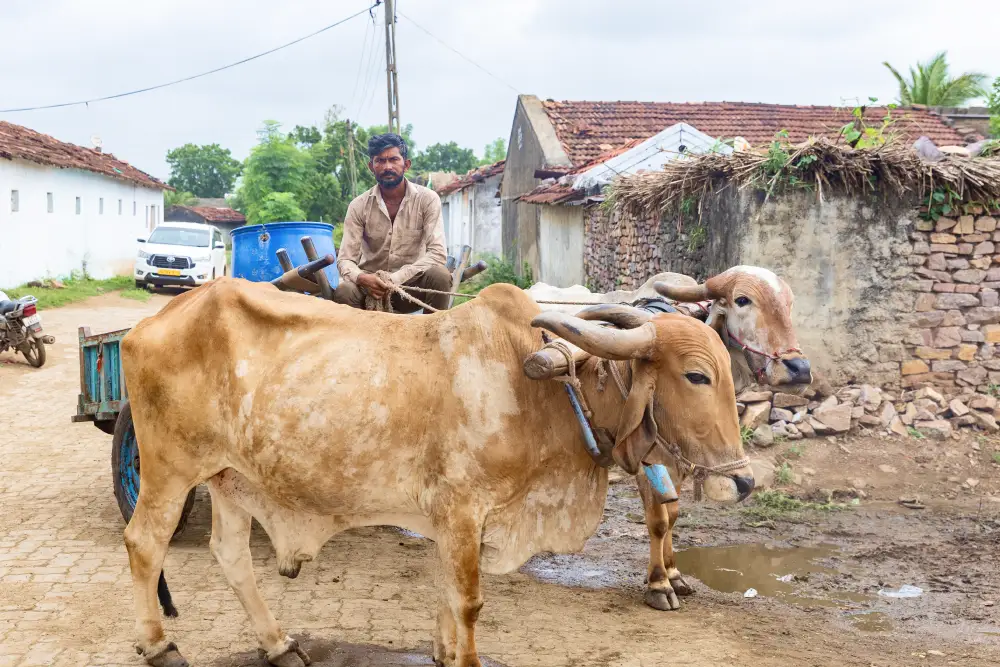
Manubhai Budhela, a livestock farmer from Khari village in Rajula, witnessed a significant transformation in his cattle farming after adopting the Artificial Insemination (AI) program introduced by CSPC. This initiative was designed to enhance cattle breeds and promote female progeny, with a 90% chance of producing female offspring—much higher than the 50-50 chances of natural breeding.
The AI process, performed by trained Livestock Inspectors, used high-quality genetic material to improve both the breed quality and overall productivity of the cattle. For Manubhai, the results were clear. His cows began producing more milk, directly increasing his income from dairy sales. This shift in productivity, driven by AI interventions, not only improved Manubhai’s livelihood but also inspired other farmers in the region to adopt the practice.
The program’s consistent follow-ups, health checks, and nutritional guidance ensured the ongoing well-being of the livestock. Manubhai’s success story showcases the potential of AI to elevate cattle farming practices and improve the livelihoods of farmers in coastal interventions of CSPC.
G: Transforming Communities: CSPC’s Journey from Water Crisis to Sustainable Solutions
In the coastal villages of Gujarat, the water crisis had long plagued communities, impacting both health and livelihoods. Poor infrastructure, irregular supply, and substandard water quality left families struggling to access safe drinking water.
Recognizing the gravity of the crisis, CSPC, in collaboration with WASMO, initiated the Jal Jeevan Mission (JJM) in 2021, targeting villages like Mota Ringaliyala and Khari. CSPC’s approach was comprehensive addressing both technical issues and fostering community leadership to drive sustainable change. The transformation was led by local champions like Maru Kishore Bhai, Ladumore Divyaben, and Mehta Gitaben, who emerged as Jal Yodhas (Water Warriors), empowering their communities through awareness programs, training on water management, and collective action.
Community-Driven Solutions
Mota Ringaliyala: Maru Kishore Bhai, a Pani Samiti member, systematically approached water distribution by regulating the village’s water supply and implementing fair distribution practices. His dedication ensured punctual water delivery and water quality improvement through chlorination. Kishore Bhai’s leadership not only improved the water management system but also instilled a sense of ownership and responsibility in the community, transforming Mota Ringaliyala’s future.
Women’s Leadership in Mota Ringaliyala: Women like Ladumore Divyaben, an Anganwadi worker, took the lead in mobilizing village women to participate in the JJM project. Through CSPC’s training and Gram Sabhas, Divyaben empowered women to advocate for better water connectivity, ultimately ensuring clean and safe tap water for all households. This success saved significant time and reduced waterborne diseases, showcasing the power of women’s leadership in community development.
Reviving Khari: In Khari, the community faced severe water wastage and inadequate supply, which was particularly detrimental during the monsoon season. CSPC’s extensive SBCC campaign, spearheaded by Mehta Gitaben, trained community members on water conservation, quality testing, and system maintenance. Gitaben’s efforts led to the installation of new taps, valves, and inline chlorinators, reducing water wastage and improving the health of the village. Her journey from a housekeeper to a community leader is a testament to the transformative power of knowledge and leadership
A Ripple Effect of Sustainability
These case studies exemplify CSPC’s approach to creating sustainable water solutions through community engagement, technical interventions, and leadership development. By building local capacities and promoting social change through behavior-focused communication, CSPC helped these villages transition from water scarcity and health crises to self-sufficient, sustainable water management systems.