
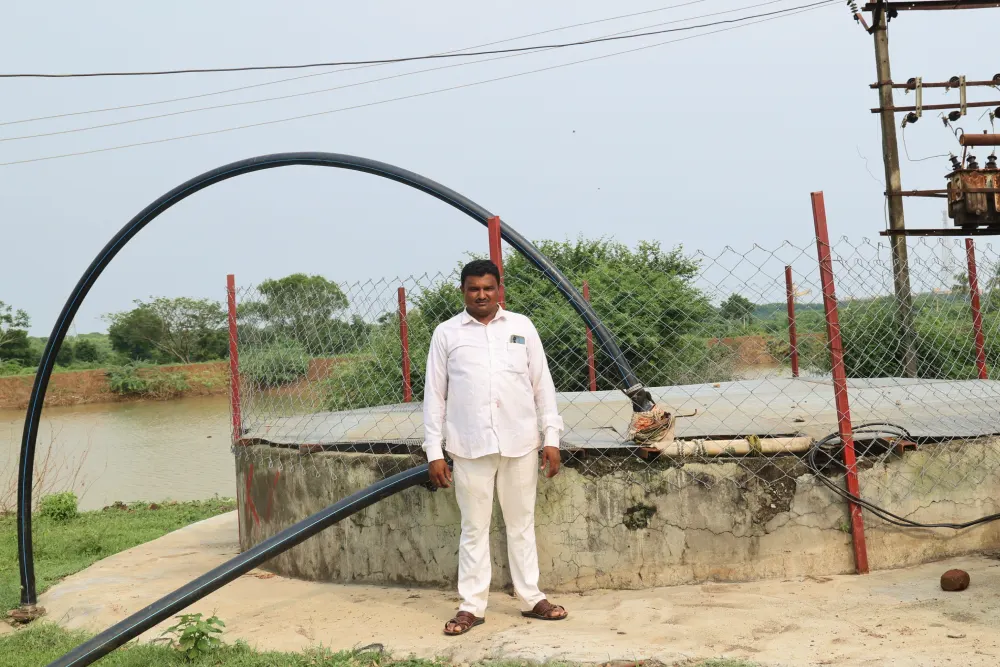
In the village of Zanzmer in Talaja, Bhavnagar, farming had become a battle against the falling groundwater table. For 55-year-old Jagdishsinh Bhikhubha Rathod, the land was generous in soil and climate, but stingy in water. His 8.8 hectares, home to crops of groundnut, fodder, onion, bajra, wheat, and maize, depended on the mercy of the monsoon and the yield of a single well. Each year, as the rains ended, the water levels dropped further, forcing him to scale back his crops and ambitions.
The CSPC, with support from HDFC, brought a ray of hope in the form of a Well Recharge System. Built near his existing well, the structure included a chamber filled with filter media to ensure that only clean rainwater would percolate down. The design allowed monsoon rains to be captured and directed straight into the aquifer, replenishing the very source he depended upon.
The change was swift and visible. Over a single monsoon season, the recharge system filled the well eight times, raising the water level by 60 feet in a well that reached a depth of 150 feet. For Jagdishsinh, this wasn’t just about numbers—it was about freedom. With more water at hand, he could irrigate larger areas, diversify his crops, and no longer worry if a delayed rain would spell disaster. Today, his farm is more resilient, his cropping intensity has improved, and the fear of running dry before the next monsoon has eased.