
Agriculture plays a pivotal role in the livelihoods of farmers residing in Rajula Taluka, located in the Amreli District of Gujarat. Situated along the coastal region of Gujarat, farmers in Rajula Taluka heavily rely on agriculture. However, farming in this area presents numerous challenges, primarily due to water scarcity. The region experiences minimal rainfall, which fails to meet the irrigation requirements. Consequently, farmers heavily depend on groundwater resources, which, unfortunately, leads to the intrusion of seawater, resulting in increased water salinity specifically in Rajula Taluka. As a result, farmers face several predicaments, including reduced farm income, livestock health issues, unemployment, distress migration, and limited contribution to their families.
To address these challenges and ensure sustainable agricultural practices, the construction of the Barbatana Check Dam proves essential in Rajula Taluka.
Background:
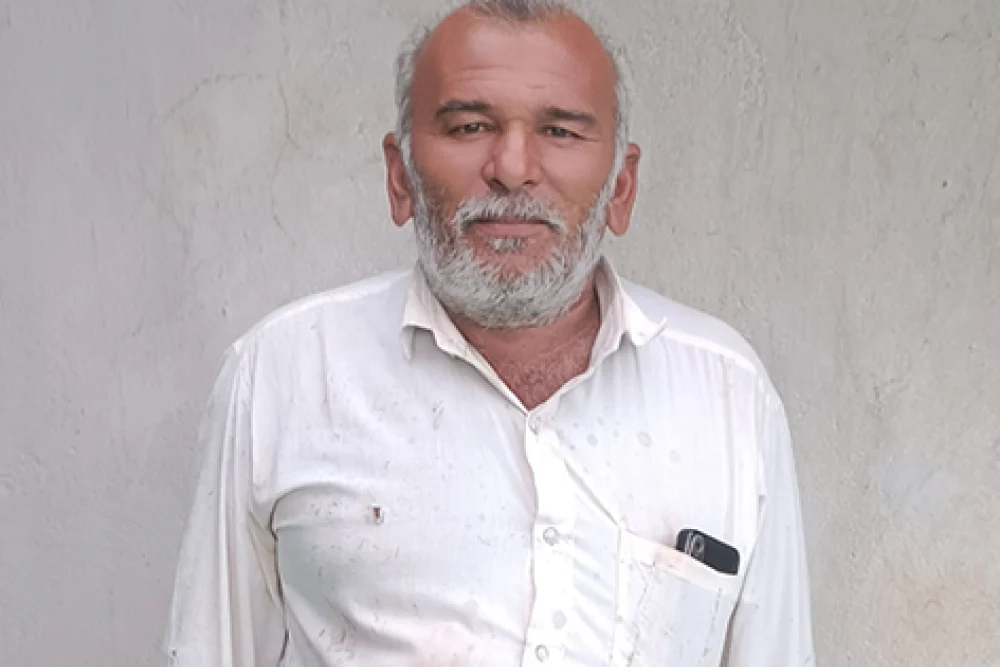
Parshottambhai Bavbhai Hadiya, a 49-year-old farmer residing in Barbtana Village of Rajula Taluka, serves as an exemplary case. Parshottambhai, along with his four family members, cultivates 15 Bigha of land, mainly focusing on Cotton and Groundnut crops. Due to minimal rainfall in the past 2-3 years, Parshottambhai heavily relied on groundwater for irrigation purposes. However, this excessive extraction of groundwater resulted in inadequate water supply, with Parshottambhai only being able to access water for 2-3 hours, which proved insufficient for his crops. As a consequence, Parshottambhai incurred losses in his farming endeavors.
Intervention by CSPC:
Under the Water Resource Management Project, the Coastal Salinity Prevention Cell (CSPC) initiated the construction of a new check dam in Barbtana village, with active community participation.
Following the monsoon season, the check dam was filled with water, leading to an increase in the water level by approximately 5-6 meters in the wells of farmers residing in the catchment area. Parshottambhai is among the beneficiaries of this initiative. As a result, Parshottambhai can now adequately irrigate his crops. With 30 years of farming experience, Parshottambhai previously faced these challenges annually. However, this year, he achieved higher yields in Groundnut production. Moreover, he plans to cultivate an additional crop during the Rabi season, which was previously not feasible. Furthermore, Parshottambhai has adopted the use of sprinkler irrigation on his farm to conserve water. The water crisis for irrigation has been worsening due to adverse climatic conditions. Nonetheless, Parshottambhai successfully grew an additional season’s crop of onions, resulting in supplementary income.
In the words of Parshottambhai:
“I own 6 acres of land, but due to water scarcity, I could only irrigate 3 acres. However, now I can irrigate the entire 6 acres, effectively doubling my income.”