
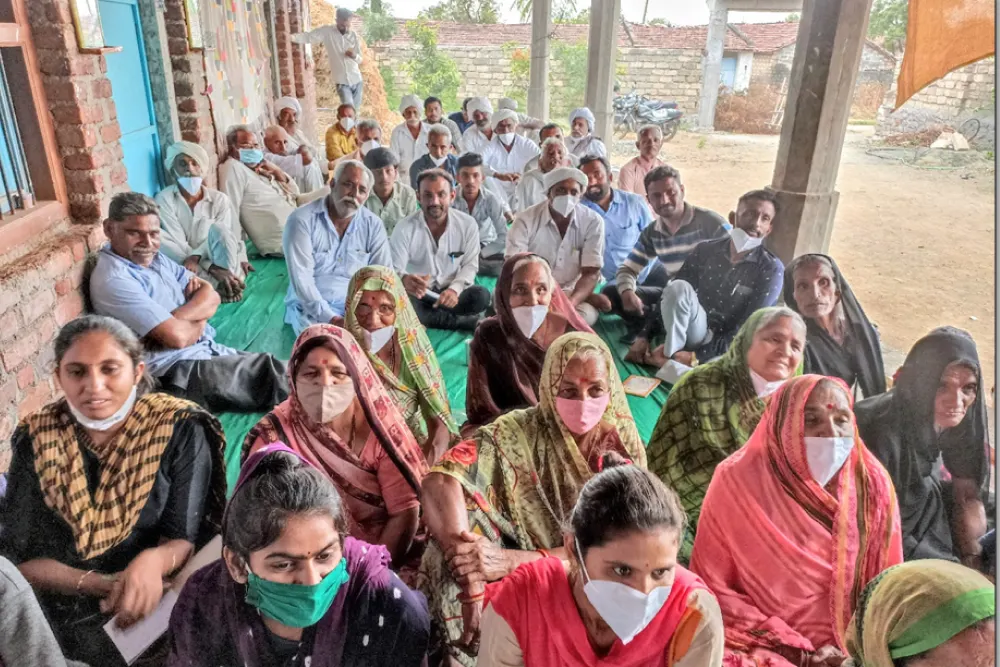
Maherambhai Nathubhai Budhela is a 55 years old farmer living in Khari village, a coastal village of Rajula block in Amreli District, Gujarat. He is living with 6 members in a single family. In terms of education, Maherambhai has attended school till 7thclass. He is a small farmer with10 bighas (4 acres) of farm landand 3 buffaloes anda cow- his main source of income being Animal husbandry& Agriculture. Maherambhai grows Groundnut and Cotton during Kharif and Onion and Gram during Rabi season.
Priority:
Khari is a semi-arid region and facesacute shortage of water during the dry spell- irrigation as well as drinking water. Women had to travel at least a kilometer to fetch the water for household chores. The residents of Khari village used to suffer from crop losses because water was available only during the Kharif season. During the remaining months of the year the farmers’ survival became difficult due to lack of water. Livestockwas also badly affected and their milk production declined due to the use of salinewater. They had to drink high TDS saline water which not only affected the health of livestockbut also the milk production went down. The ground water table has gone down by over a thousand feet.Water shortage was a dire issue in Khari adversely affecting the health and livelihood of its residents. Maherambhai Nathubhai Budhela was not an exception.
District / State: Amreli, Gujarat.
Location: Khari village in Rajula taluka.
Beneficiary Name: Maherambhai Nathubhai Budhela
Struggle Story:
Maherambhai had dug several bore wells over a 1,000 feet below the ground anticipating water but unfortunately tasted no success. Dejected, he moved to another plot of land and drilled another 500 feet, again encountered the same fate. In addition, he was losing a fortune to undertake these ambitious bore well projects each costing over ₹30,000.
He is a third generation farmer from his family and mainly cultivates cotton, and groundnut on his 4 acreslandholding. Maherambhai is well aware of the ill effects of drilling the ground for water, but says that he is helpless.
Arid Saurashtra region of Gujarat has been facing an acute agrarian crisis due to lack of water for irrigation. Already faced with drought like situations in the couple of years in the past 2 decades; with scanty or almost no rainfall.
The situation has worsened due to the crop failures, in most cases. There were a couple of old and badly damaged check dams for water storage in and around Khari village. However, their utility had diminished and farmers haven’t been receiving most of its water due to the dilapidated structures- water used to run off and storage was also minimized due to huge amount of silting in the catchment area of these check dams.
Mushkil (Challenges):
The problem of water shortage kept aggravating with every passing year. In this situation, Maherambhai often failed to get enough water for the irrigation of his crops, leading to poor produce. Livestock health and productivity also used to deteriorate.Every year he was facing losses in farming, taking debts to cover up his farm losses. He was contemplating to migrate to Surat city from his native village- following the suit of a dozen of his fellow villagers. His wife was also distressed as she had to travel over a kilometer just to fetch water and wash the clothes of family members. She was hardly left with any surplus time to dedicate to her growing kids to help and support them.
Mumkin (Benefits and Success post):
In theseadverse conditions, Maherambhai got the support from Coastal Salinity Prevention Cell(CSPC) an initiativeof TATA TRUSTSworking in the coastal regions of Gujarat. CSPC undertook a holistic approach to address the water crisis prevailing in Khari. The efforts started by the restoration and repair of the check dam structures to prevent the water run-off. They were also desiltedto enhance the storage capacity of old structures in Khari village. Due to this work around 22 farmers including Maherambhai, falling in the catchment area of these water storage structures, of the village got benefited. Over 150 acres of arable land also falls in the catchment area and availability of water for irrigation purposes was ensured. This will help these farmers to ensure ample water supply for the irrigation of their crops- especially during the
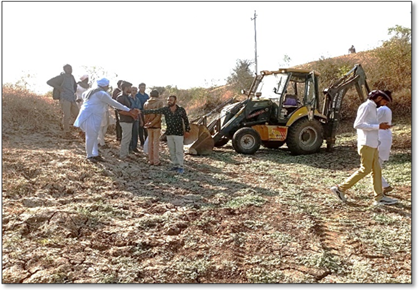
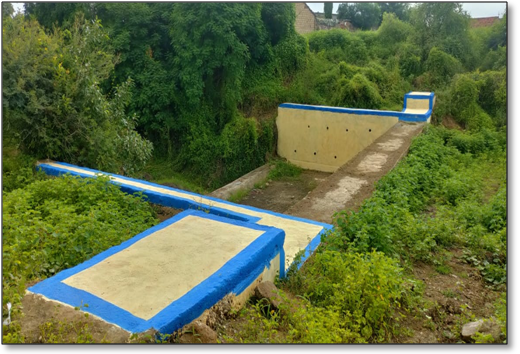
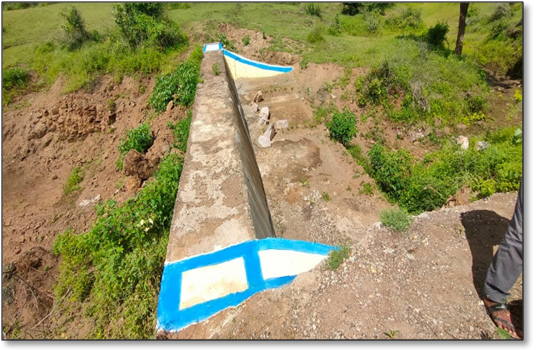
winter crops of wheat, gram and onion. The percolation of water will improve the water table and will help round the year availability of water for drinking and household chore purposes.
With the support of Tata Trusts, CSPC completed work of four check dam structures- one desilting and the remaining three structures were repaired and renovated, along with their desilting. An additional water storage capacity of around 1.60 Mcft has been provided to the village. These check dams
are fulfilling the requirements of Maherambhai in terms of water requirement for households, irrigation and livestock.
Repairing &Desilting at Khari CD-3 Repairing &Desilting at Khari CD-4
Jal Jeevan Mission:
Another major intervention of CSPC in Khari village was withthe introduction of Jal Jeevan Mission (JJM)project.The goal of Jal Jeevan Mission is to provide functional household tap connection to every household with service levels.
The below kinds of works were taken up under the Jal Jeevan Mission project:
- Water supplyinfrastructure laid down for tap water connection to every household
- Reliable drinking water source developed with Govt. help and support
- Formation of the village action plan, creation of Pani Samiti and their capacity building
- Regular meetings and awareness programs related to water quality measurement and management
- Retrofitting of completed and ongoing piped water supply schemes to provide FHTC andraise the service level
- Capacity building of various stakeholders and support activities to facilitate theimplementation.
The construction work of the water sump for the source of water supply has been completed and the pipeline has been laid out for the distribution of water to every household. The water supply will commence soon after some technical testing and concerned department approvals.
With Jal Jeevan Mission, Maherambhai has also installed a tap connection in his courtyard without any extra effort. He is optimistic that now his wife will be saved from travelling 1 km daily to fetch water and she can utilize this time to nurture theirkids, family members and other agriculture activities
CSPC, has also undertaken a dedicated 3 days’ workshop on water security and conservation in Khari village- Water Budgeting (accounting of all the water that flows into and out of the village catchment area
Water Budgeting in Khari
from rainfall, natural resources etc.). This 3 days Water Budgeting exercise was attended by 70 village residents out of which 25 were women and 45 were men. The workshop in sensitized the Khari residents
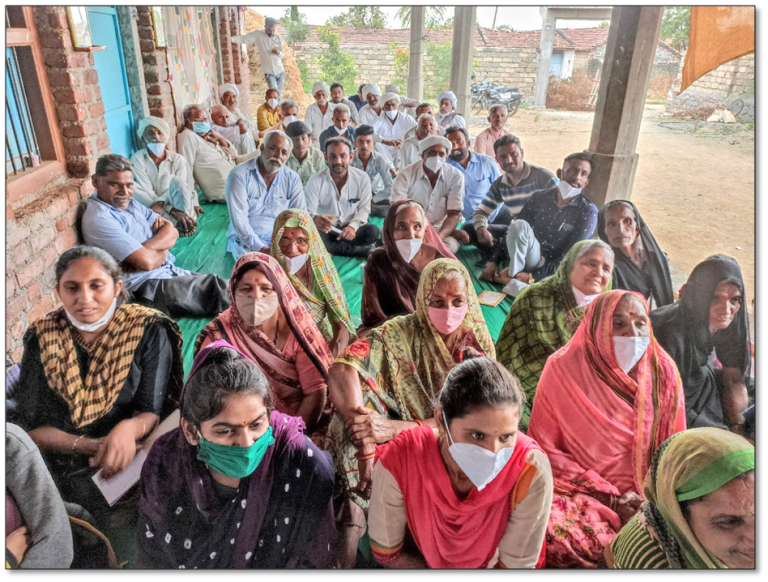

for conservation of water and its optimal utilization to ensure water availability and securityin the near future.
Moisture Meter: CSPC has also provided moisture meters in all project villagesunder which Maherambhai also got benefitted. Now Maherambhai is able to optimally assess the requirement of irrigation in crops without any loss of resources and time. Usage of moisture meter has led to 2 lesser irrigations in a cropping season leading to a conservation of approximately 1,65,000 ltrs of
water per bigha and a total of 16,50,000 ltrs in a year (considering 10 bighas landholding of Maherambhai.) This has also led to a saving of ₹ 5,240 by virtue of reduced requirement of labor and electricity consumed for the additional irrigations. Optimum irrigation will also lead to higher crop production, as suggested by the experts. Things will become clearer once the first harvest arrives in Oct-Nov, after the use of the
Maherambhai Testimonial: Now Maherambhai has quit the idea to migrate Surat city with his family. He is planning to next season crop yielding like Maherambhai all the Khari resident got a new ray of hope to make their better life styles. He says “The organization has done a great deal of work in my village to ensure water security and management. The repair, renovation and desilting of the dilapidated check dams has brought a new ray of hope in the farming community. I also got the moisture meter from CSPC which is very helpful to know the moister of soil that indicatesthe optimal requirement of irrigation in crops. By using the moister meter, my electricity expenditure billhas reduced by Rs. 5,240 /- per yearand I availtwolesser irrigations in one crop cycle. This has helped me to save the water for next crop and also reduce my water pumping electricity expenditure. In other words, the moister meter has increased my profit and saved unnecessary wastage of resources and time. I am very happy to use this Moister meter and I will recommend to all my farmer friends to use this. I am also looking forward to the commencement of water supply through my tap connection.”