
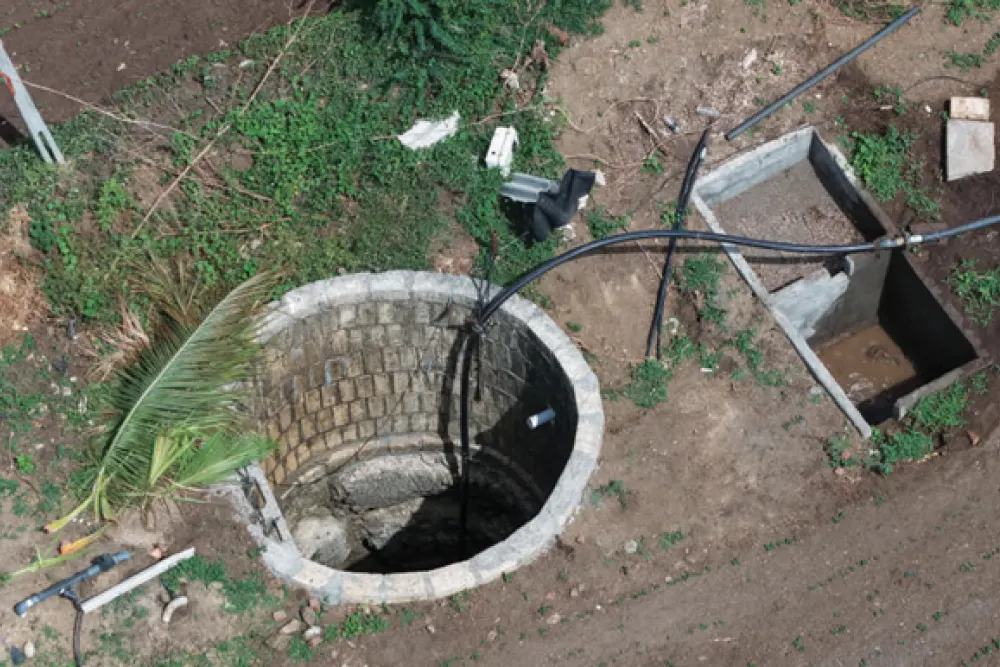
In Gujarat’s dry cotton belt, where 25% of India’s cotton is grown, excessive groundwater extraction and hard rock aquifers have led to rapidly depleting water tables, threatening smallholder farmers’ livelihoods. To address this, CSPC, supported by Tata Trusts, introduced the Bore Blast Technique (BBT) – an innovative method to create underground storage in low-potential hard rock areas.
BBT involves controlled blasting in closely spaced bore wells around production wells. This process crushes rocks and creates fractures, enabling better groundwater recharge and increased storage.
In Talaja block, Bhavnagar district, BBT was implemented across 550 hectares in five villages, spanning the catchments of rivers Talaji and Navli. These villages primarily grow cotton, groundnut, wheat, onions, chickpeas, and summer fodder crops.
The results have been transformative:
- Mota Ghana Village: BBT was undertaken in 33 clusters along river Navli between 10 check dams.
- Case of Bhayabhai Bhammar: Water level in his 99 ft well rose from 14 ft (Sept 2022) to 81 ft; TDS reduced from 728 ppm to 528 ppm. About 50 wells nearby recorded similar improvements.
- Case of Dadubhai Bhammar: Water level in his 90 ft well increased from 39 ft (Sept 2021) to 80 ft; TDS dropped from 930 ppm to 870 ppm. This allowed him to irrigate an additional 3–4 acres and grow summer fodder for the first time in years.
By enhancing infiltration and storage, BBT has given farmers a reliable irrigation source year-round, reducing their vulnerability to drought and improving water quality. The intervention is proving to be a game-changer in hard rock aquifers, ensuring both water security and improved agricultural productivity.