
Introduction:
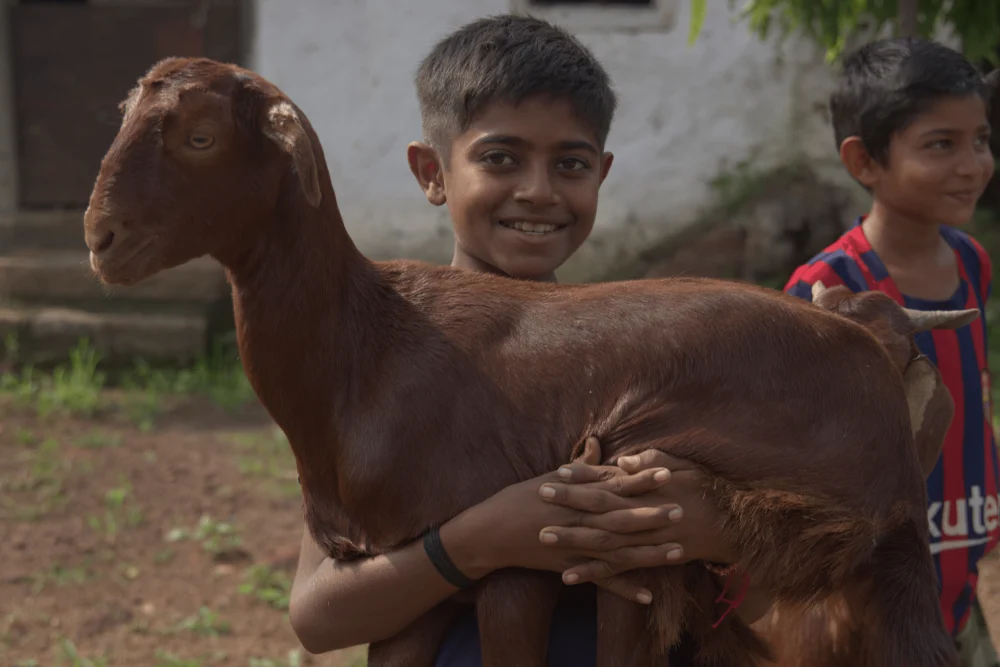
In the small, marginalized community of Jhanjharda village in Rajula District, the daily struggle for survival is a reality for many families. In this setting, a transformative initiative was introduced to empower the local community by providing them with a sustainable source of income—climate-resilient Sirohi goats.
The Context:
Jhanjharda village, like many others in the Rajula Block , faces the challenges of arid and semi-arid conditions. The lack of reliable water sources, coupled with poor soil quality, limits agricultural productivity.
Recognizing the need for sustainable and adaptive livelihood strategies, the Coastal Salinity Prevention Cell (CSPC), in partnership with local stakeholders, initiated engagements aimed at improving the income-generating capacity of marginalized families by providing them with a supplementary source of livelihoods – raising of Improved Sirohi goats. This breed was chosen for its climate adaptability, rapid reproduction rate, and ability to thrive on minimal resources.
Chandrikaben Laxmanbhai Parmar’s Journey
Among the households engaged with was Chandrikaben Laxmanbhai Parmar, a resident of Jhanjharda village. Chandrikaben’s family, like many others in the village, struggled to make ends meet. Farming was difficult due to erratic rainfall and the small land holding and poor fertility of the land. With limited options for income, the family’s situation was dire.
In 2023, the family was provided with three Sirohi goats—two females and one male—as part of the CSPC’s initiative. The provision of these goats marked the beginning of a remarkable transformation for Chandrikaben and her family.
A New Beginning:
The Sirohi goats, known for their hardiness and ability to adapt to the harsh climate of the region, quickly became an invaluable asset to the family. Within a short period, the goats reproduced, resulting in seven offspring. Among these, the family decided to sell one of the kids for INR 15,000, a significant sum that was reinvested into the family’s needs.
The remaining goats continued to thrive, providing the family with a steady supply of milk. This not only improved the nutritional intake of the family but also allowed them to sell excess milk in the local market, further boosting their income. The goats, requiring minimal maintenance and no special fodder, proved to be a low-cost, high-reward investment.
Sustainability and Growth:
What sets this initiative apart is the sustainability of the livelihood it provides. The Sirohi goats are not just a temporary solution; they are a long-term asset that continues to provide value to the family. The goats are known for their ability to conceive and reproduce twice a year, ensuring a continuous source of income through the sale of offspring.
The project’s design is also noteworthy for its focus on scalability and community-wide impact. Chandrikaben’s family is one of 30 beneficiaries in the cluster who have received Sirohi goats. Each of these families now has the potential to improve their livelihoods in a similar manner. By focusing on a breed that is well-suited to the local environment, the project ensures that the goats can be easily maintained, even by those with limited resources.