Across Gujarat’s coastal regions, livelihoods are deeply intertwined with land, water, and climate. For decades, communities here have battled the invisible threat of salinity — degraded soils, declining crop yields, and poor animal health. These challenges have pushed many families toward migration, debt, and uncertainty.
At Coastal Salinity Prevention Cell (CSPC), we believe that a resilient livelihood begins with restoring the relationship between people, soil, and water. Our livelihood interventions bring together farmers, livestock rearers, and communities to build sustainable, climate-smart income opportunities that protect both nature and nurture.

Our livelihood strategy is rooted in sustainability, participation, and innovation, ensuring that every intervention not only improves income but also strengthens the long-term well-being of communities and ecosystems.
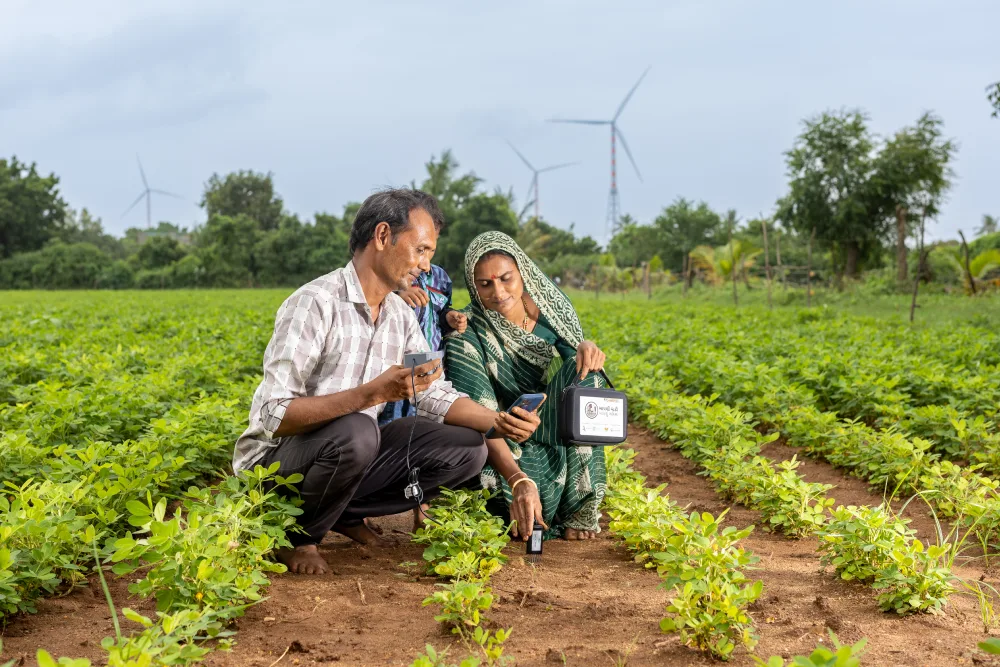
We promote farming that is adaptive, informed, and water-efficient, helping farmers shift from dependency to self-reliance.
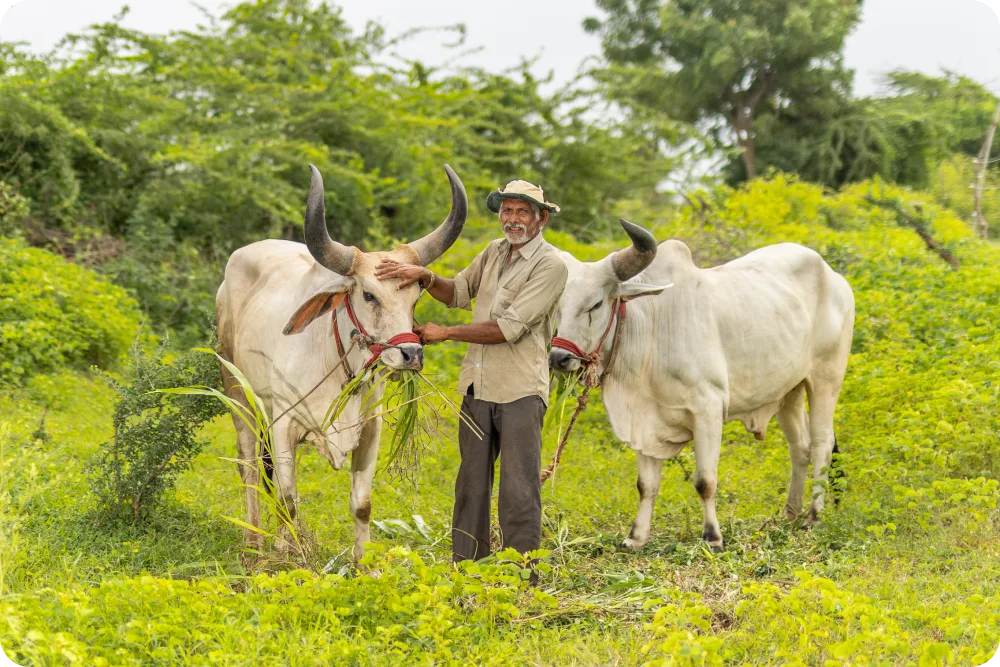
Livestock plays a crucial role in sustaining rural economies, especially in salinity-affected regions where crop yields are unpredictable. CSPC strengthens this lifeline through veterinary care, breed improvement, and fodder security.
Our education interventions contribute to multiple SDGs:
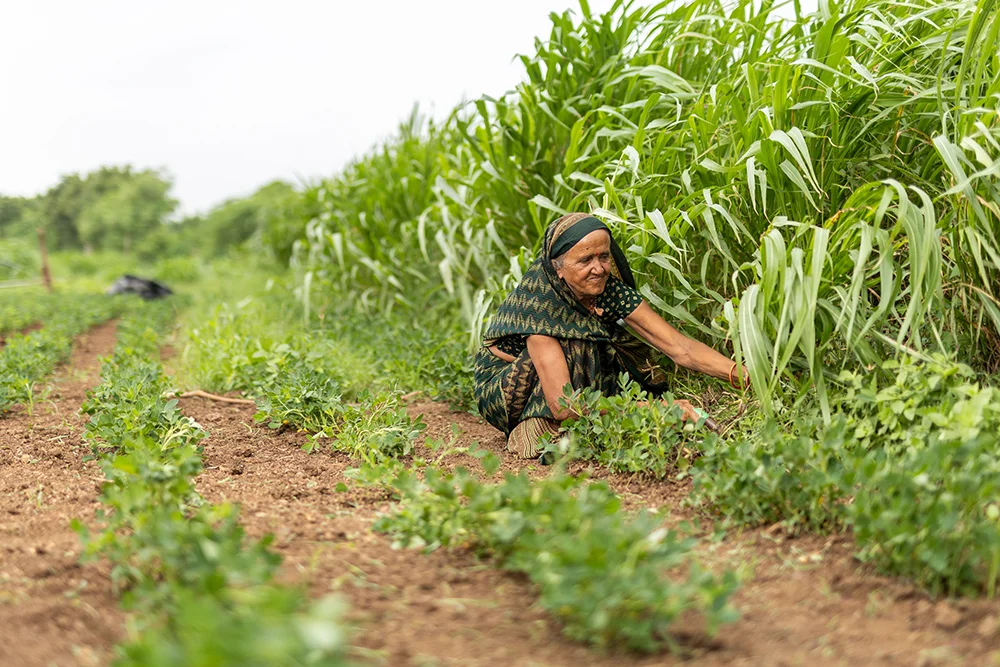
In the quiet village of Mathavada in Talaja, Dhudiben Kanabhai Makwana’s three acres of scattered farmland had long been a place of hard work but dwindling returns. For years, she and her family of eight wrestled with the same cycle: cooking on smoke-filled clay stoves that left eyes burning and pots blackened, spending hours collecting firewood, paying heavily for diesel to run the irrigation pump, and watching the soil lose its richness under the weight of chemical fertilizers. Summers were the hardest—when water ran short, the fields would stand dry, and the family would migrate to nearby towns in search of work.