Menstrual Hygiene Management (MHM)

Breaking Silence, Building Dignity

For generations, menstruation has been shrouded in silence, surrounded by myths, stigma, and discomfort.
In the coastal belts of Gujarat, this silence often translates into restricted movement, missed school days, and compromised health for women and adolescent girls.

At CSPC, we believe that menstrual hygiene is not a privilege, it is a right.
Through our Menstrual Hygiene Management (MHM) initiative, we work to empower women and girls with the knowledge, confidence, and infrastructure they need to manage menstruation with dignity and health.
Our Approach

CSPC’s MHM program bridges education, awareness, and access, engaging not just girls and women, but also men, boys, and community leaders — to make menstruation a shared conversation instead of a silent struggle.

Our approach rests on four pillars:

  1. Education and Awareness: Building scientific understanding of menstruation and reproductive health.
  2. Access and Infrastructure: Ensuring safe, private, and functional spaces for menstrual hygiene in schools and communities.
  3. Behavioural Change: Breaking taboos through dialogue and participatory learning.
  4. Sustainability and Innovation: Promoting eco-friendly products and locally led solutions for menstrual waste management.
  5.  
Girls & Parents Reached
0 +
Educators Trained
0 +

Key Interventions

Awareness, Education & Dialogue

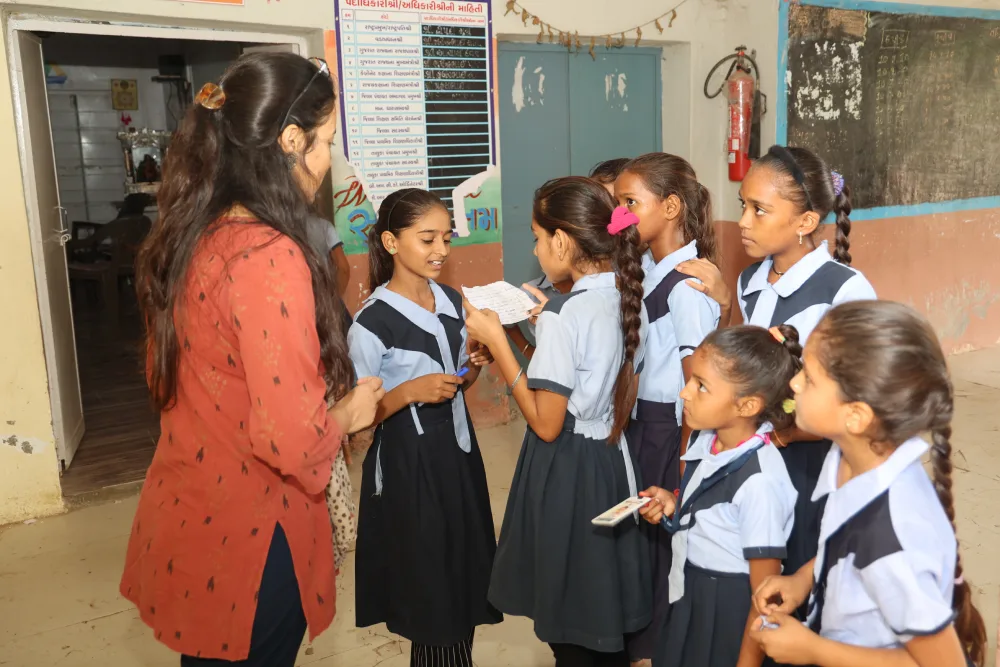
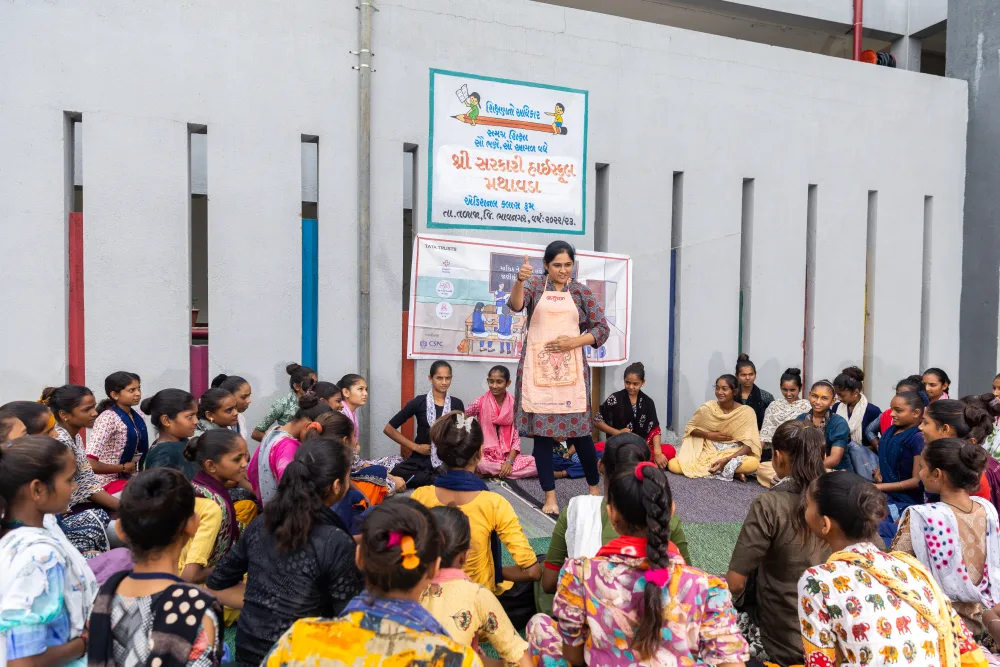
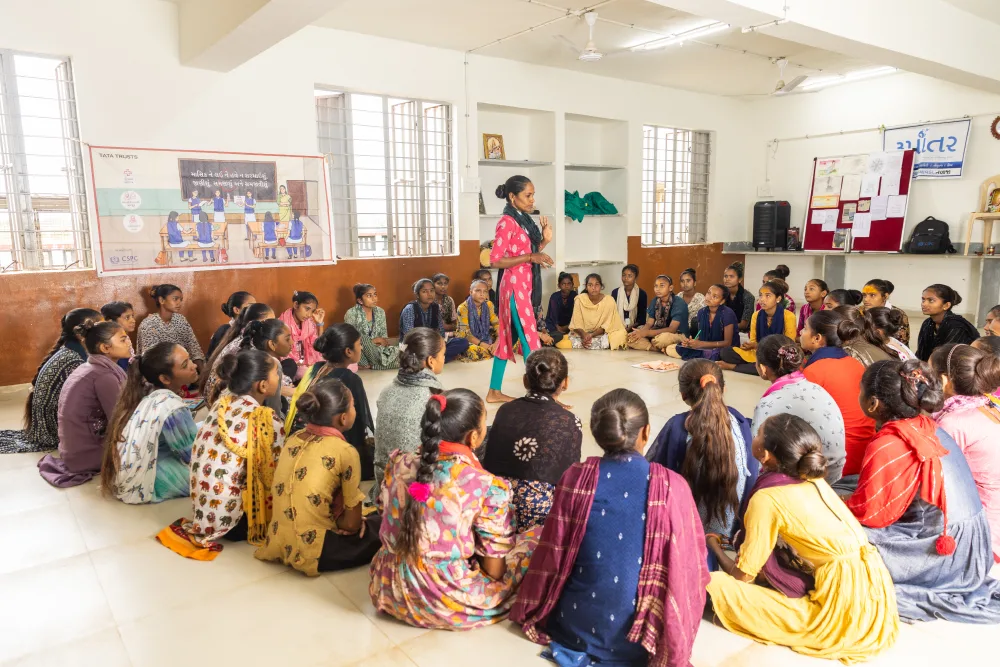
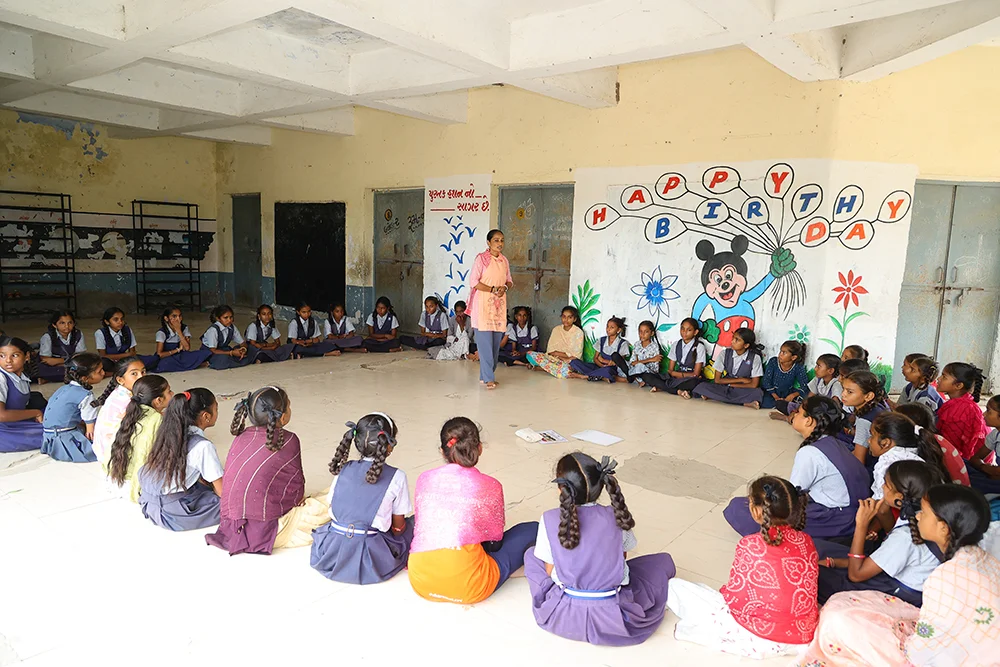
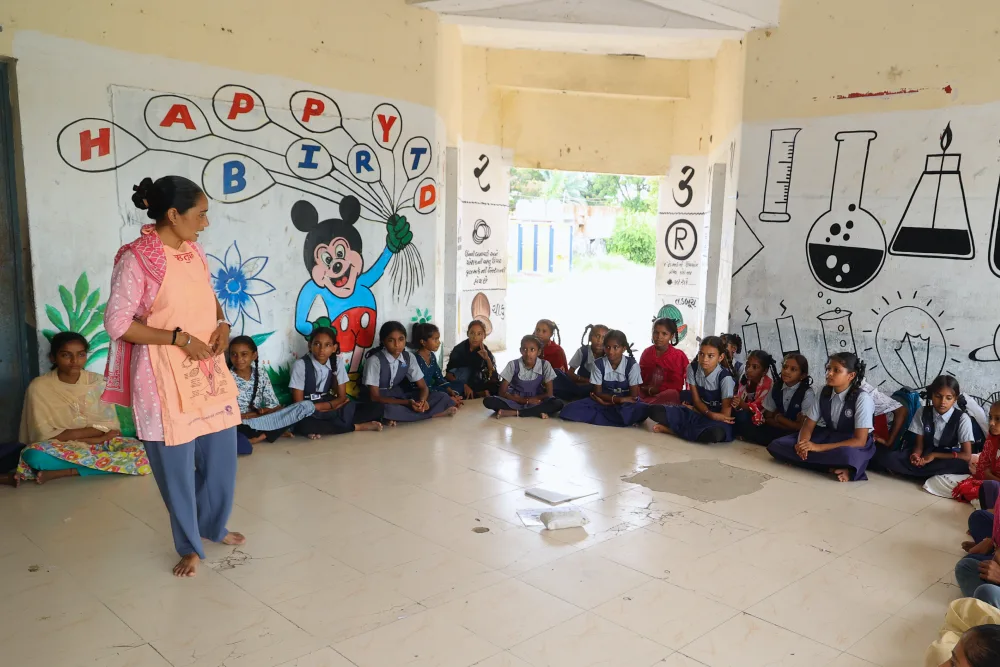
Our sessions begin with open conversations, designed to normalize menstruation and remove fear or shame.
From classrooms to community halls, CSPC uses participatory and creative approaches like storytelling, games, and interactive modules to make menstrual education relatable and memorable.

Key Highlights:

  • We conduct age-appropriate sessions on menstrual hygiene, nutrition, and reproductive health
  • Modules developed in 4 phases, covering body awareness, hygiene, product use, and emotional well-being
  • SBCC activities such as snakes & ladders, hopscotch, and storytelling used to make learning engaging

Through these efforts, menstruation is no longer seen as a limitation — it is being understood as a natural part of life and health.

Capacity Building of Frontline Workers

Our change-makers aren’t just within the classrooms — they are also in communities.
We train ASHA and Anganwadi workers, teachers, and health facilitators to become peer educators and advocates for menstrual health.

Key Highlights:

  • 200 ASHA workers and 210 Anganwadi workers trained across Sanand block
  • Trained in menstrual hygiene, adolescent health, and communication methods
  • Sessions integrated with ongoing government health and ICDS programs for continuity

These local champions ensure that knowledge travels far beyond workshops — into homes, mothers’ groups, and the minds of young girls.

Infrastructure & Innovation

Education alone isn’t enough without access to safe and hygienic facilities.
CSPC ensures that every girl has a private, dignified space to manage her menstrual hygiene at school.

Key Highlights:

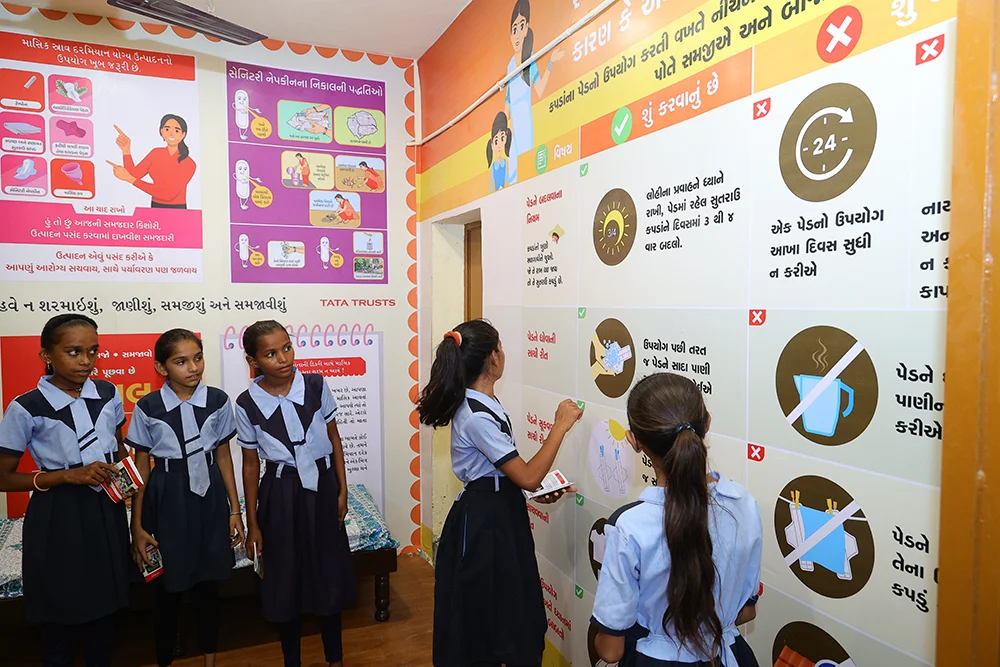
  • Construction of “Happy Period Rooms”, designated menstrual hygiene spaces in schools
  • Digital Standees installed in schools and public institutions sharing audio-visual menstrual health content
  • Promotion of eco-friendly menstrual products through local demonstrations and awareness sessions
  • Supported communities in safe disposal and waste management practices

These spaces have redefined confidence, enabling girls to attend school regularly without fear or discomfort.

Community Campaigns and Collective Action

To truly change perceptions, the conversation must include everyone, fathers, teachers, boys, and leaders.
CSPC’s MHM campaigns bring the entire community together to break silence and build empathy.

Key Highlights:

  • Observed World Menstrual Hygiene Day 2025 with 50 girls and parents in Mathavada village
  • Organized half-day workshop with departments like Health, ICDS, Education, and CSOs to strengthen coordination
  • Conducted interactive dialogues led by experts on gender, menstrual health, and cervical cancer awareness
  • Ongoing partnerships with Gujarat Cancer & Research Institute (GCRI) for cancer screening awareness

By making menstruation a community issue, not just a women’s issue, we are creating space for shared responsibility and lasting change.

Alignment with SDGs

Our education interventions contribute to multiple SDGs:

SDG 3: Good Health and Well-being

SDG 4: Quality Education

SDG 5: Gender Equality

SDG 6: Clean Water and Sanitation

SDG 10: Reduced Inequalities

Impact Story

A story of awareness and change- Khatdi village (Talaja Bhavnagar)

In a small community of 150 households, where 60 belong to the Bharwad family, traditions and taboos often shape daily life. Agriculture and animal husbandry are the backbone of their livelihood, and most residents have not studied beyond the 8th grade. Among this close-knit group, a quiet revolution is taking root, led by the women of the community.

For decades, menstruation has been shrouded in silence. Yet, change began with an uneducated yet progressive mother, Sonalben Sabhad, who decided to celebrate her daughter’s first period rather than hide it.